

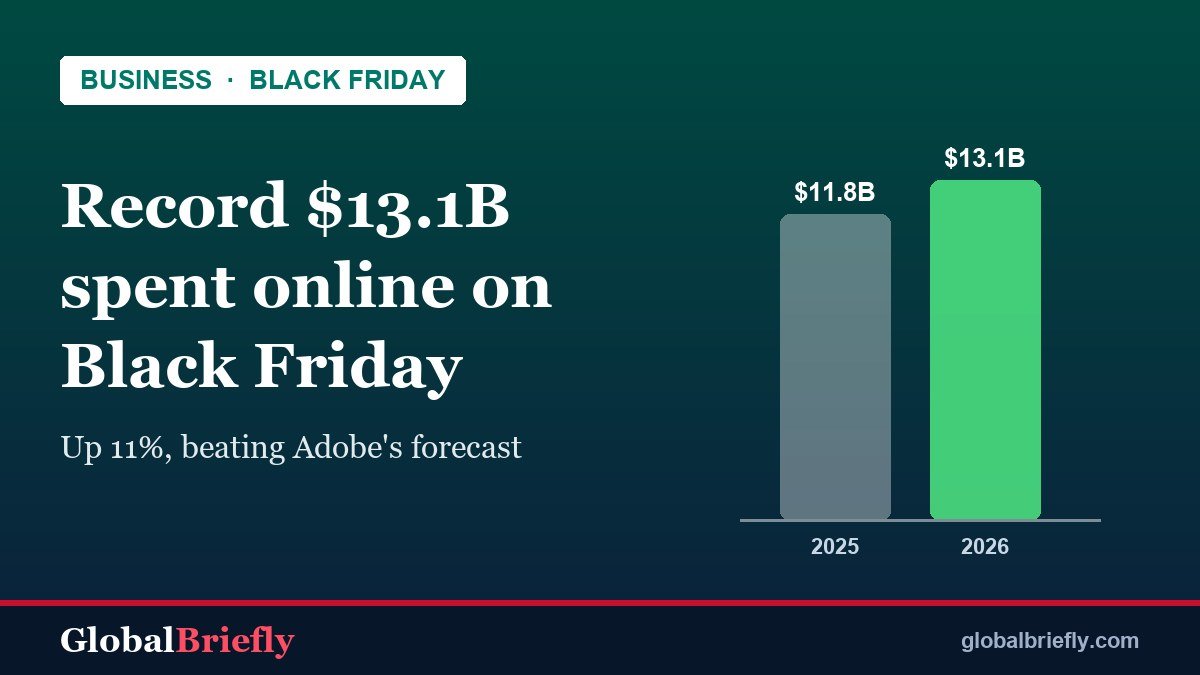
The headline number is huge. Americans spent a record $13.1 billion online on Black Friday, up 11% from last year and comfortably above what Adobe had predicted. But spend a minute with the rest of the data and a more complicated picture of the American shopper comes into view.
What happened
Adobe Analytics, which tracks online transactions at major US retailers, says online spending on Black Friday hit $13.1 billion. It had forecast about $12.9 billion. Last year's Black Friday total was around $11.8 billion.
Electronics and gaming were the strongest categories, according to Adobe, while apparel and appliances saw the biggest promotions. Shoppers also stocked up on everyday essentials such as cleaning supplies, pet care products and personal hygiene items.
The stores told a different story. Geospatial analytics company PassBy counted nearly 930 million visits to physical stores on Black Friday, down 2.2% from a year earlier.
The AI shopping assistant arrives
One of the more striking figures in Adobe's data has nothing to do with discounts. Traffic that reaches retailers from AI chatbots and AI-powered browsers is now converting into purchases 68% more effectively than a year ago. In plain terms, people who ask an AI assistant what to buy are increasingly following its advice all the way to the checkout.
What comes next
- Cyber Monday: Adobe expects $15.1 billion in US online sales, up 6.2% from last year.
- Buy now, pay later: about $1.09 billion of Cyber Monday spending is expected to go on BNPL plans, up 5.3%.
- The five days from Thanksgiving: roughly $47.5 billion in online spending.
- The full season: the National Retail Federation expects US holiday sales in November and December to rise 4.2% to about $1.01 trillion.
Analysis: a record, but not quite a boom
This section is GlobalBriefly's analysis and opinion.
Records make good headlines, but they are measured in dollars, not in shopping bags. The National Retail Federation itself says part of this season's growth comes from higher prices. When things cost more, you can spend a record amount and still take home less than you did a year ago.
Look at what people bought, too. Alongside TVs and games consoles, shoppers used the sale to stock up on detergent, pet food and toiletries. That is not the behaviour of people splashing out. It is the behaviour of households using discounts to stretch a squeezed budget, with persistent inflation in the background.
The shift away from stores keeps going as well. Fewer people walked into shops, and more of the shopping happened on phones and laptops, increasingly guided by AI assistants. For retailers, the lesson is that the battle for customers is moving away from the shop window and towards search results and chatbots.
None of this means Black Friday disappointed. It clearly didn't. It means the record is real, but the confidence behind it is more cautious than the number suggests.
Before you shop on Cyber Monday
- Check price history before you buy. Some deals are simply last month's price.
- Be careful with buy now, pay later. Several small plans can add up fast.
- If an AI assistant recommends a product, still compare prices yourself.
- Stick to a list. Discounts only save money on things you actually need.


Comments (0)